Have Questions About Knee Replacement Recovery? We’ve Got Answers
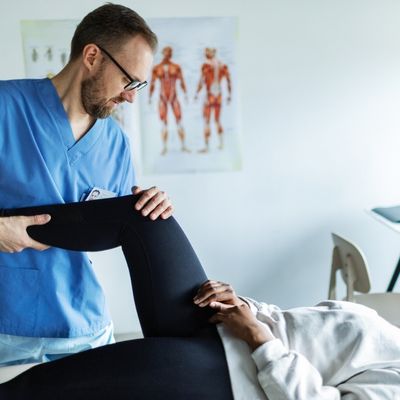
If you’re considering knee replacement surgery, you probably have many questions about recovery. After all, rehabilitation is key to getting you back on your feet. But while the journey may not be easy or fast, it will be worth it for years to come.
Rehabilitation after knee replacement surgery typically takes about 12 weeks. However, it can take six months to a year to fully recover and regain maximal strength and endurance.
Committing to a comprehensive therapy plan and pushing yourself to do your best is the key to healing faster and enjoying long-term success. Your reward is regaining motion and strength in your knee so you can fully return to your favorite activities and active lifestyle.
Summa Health answers your top questions about what you can expect from knee replacement recovery. Just remember, each person’s journey is unique because everybody is different.
How painful is physical therapy?
It’s normal and expected to have some level of pain and swelling after surgery. While your therapy may be uncomfortable initially, taking the medication your healthcare provider prescribes will ease your pain and allow you to participate.
You also can reduce pain and swelling by doing the following:
- Apply a cold compress three to four times daily for 10 to 20 minutes. Ensure a cloth is placed between your skin and the ice to avoid burning your skin.
- Keep your leg elevated to reduce swelling.
- Avoid placing an object directly under your knee so that your knee is not in a bent position for a prolonged period of time.
- Take over-the-counter medications per your healthcare provider’s recommendations.
- Continue to move and use the joint to avoid stiffness.
When will I be able to walk after surgery?
You should be able to place your total weight on the operated leg within several hours after surgery. The day of or the day after surgery, you may get out of bed and walk, such as to the bathroom or around the room.
Starting about 24 hours after surgery, you’ll likely begin physical therapy sessions twice a day to learn specific exercises to strengthen your knee and increase mobility.
When discharged from the hospital, you should be able to walk independently with a walker and climb stairs to get around your home.
Will I need crutches, canes or walkers?
You will start using a walker, but will likely wean off it about two to three weeks after surgery. Assistive devices allow you to do necessary activities, such as walking to the bathroom and dressing while keeping you safe. Your physical therapist (PT) will progress you off the walker, but it is important to continue using it until advised by your PT.
What does physical therapy look like after knee replacement surgery?
Rehabilitation is essential to improving your mobility, strength and endurance, and setting you up for long-term success.
Your physical therapist will build an individualized plan that includes exercises, education and hands-on care to strengthen your knee and improve motion. In addition, your therapist will teach you ways to avoid injury and how to use your new knee(s).
The amount of therapy you need will depend on you, your motivation, health and preoperative conditioning. Once discharged, you’ll likely have in-home physical therapy about three times a week for two weeks. Then, it’s highly recommended you continue physical therapy on an outpatient basis for about three months.
On average, here’s what you can expect in knee replacement recovery:
The first month
During the first few weeks after surgery, physical therapy will focus on reducing pain and getting comfortable on your feet. You’ll perform range of motion exercises, strengthening and flexibility exercises. Exercises often include bending and extending your knee, standing from a seated position, using a stationary bike to improve knee motion and walking for about 10 minutes. The goal during this stage is to improve mobility and range of motion.
Month two
After the first month of physical therapy, pain and swelling will have decreased, and you should notice a dramatic improvement in your knee — as long as you stay on your therapy routine. The goal is to increase knee range of motion and leg strength.
During this stage, you’ll work toward bending your knee more than 90 degrees, climbing stairs, and returning to light household chores. Exercises may include continued use of a stationary bike to improve knee motion, the therapist bending and straightening your knee to increase knee motion, education on proper walking technique, mini-squats, and standing leg strengthening exercises.
Toward the end of the second month, gym equipment may also be utilized under the guidance of your physical therapist. Continued walking with additional distance is normally encouraged.
Month three
About two months after surgery, you should have significantly less stiffness and pain. The goal now is to rapidly increase strength in your knee and surrounding muscles while improving mobility and range of motion.
Your physical therapist may ask you to do more intense aerobic and strength exercises to meet your goals. Exercises may include balance exercises, step-ups, utilization of more gym equipment for strengthening, biking and walking longer distances.
At this stage, if you enjoy high-impact activities, your therapist can tailor the sessions to teach you ways to modify the activity to keep your knee safe.
After about 12 weeks, your physical therapy sessions may end or vastly decrease, but it’s still important to continue your exercises at home. Full recovery can take up to one year.
When will I return to a fully active lifestyle after knee replacement surgery?
After the first month of physical therapy, you’ll likely be able to return to low-impact daily activities, such as driving, household chores and errands. You also may be able to return to work, although it depends on the demands of your job.For instance, you probably can return to a sedentary job, but if you have a demanding job that requires physical labor, heavy lifting or travel, you might need up to three months of recovery before returning.
By two months, you’ll likely return to low-impact physical activities, such as swimming, biking and taking longer walks.
About three months after surgery, you hopefully can return to high-impact physical activities, such as golfing, dancing and aerobics. Just be sure to start slow and work your way up to the level of activity you were used to. If you’re unsure, talk to your surgeon or physical therapist.
While the journey may seem like a long road ahead, you can take comfort in knowing it’s all obtainable. It just takes time, patience and hard work.
About the author

Morgan Schaber, PT, DPT and Diana Stitch, PT, DPT
Vitality General Wellness eNews Sign Up
Receive the Summa Health eNewsletter for the latest health tips, advice and updates.